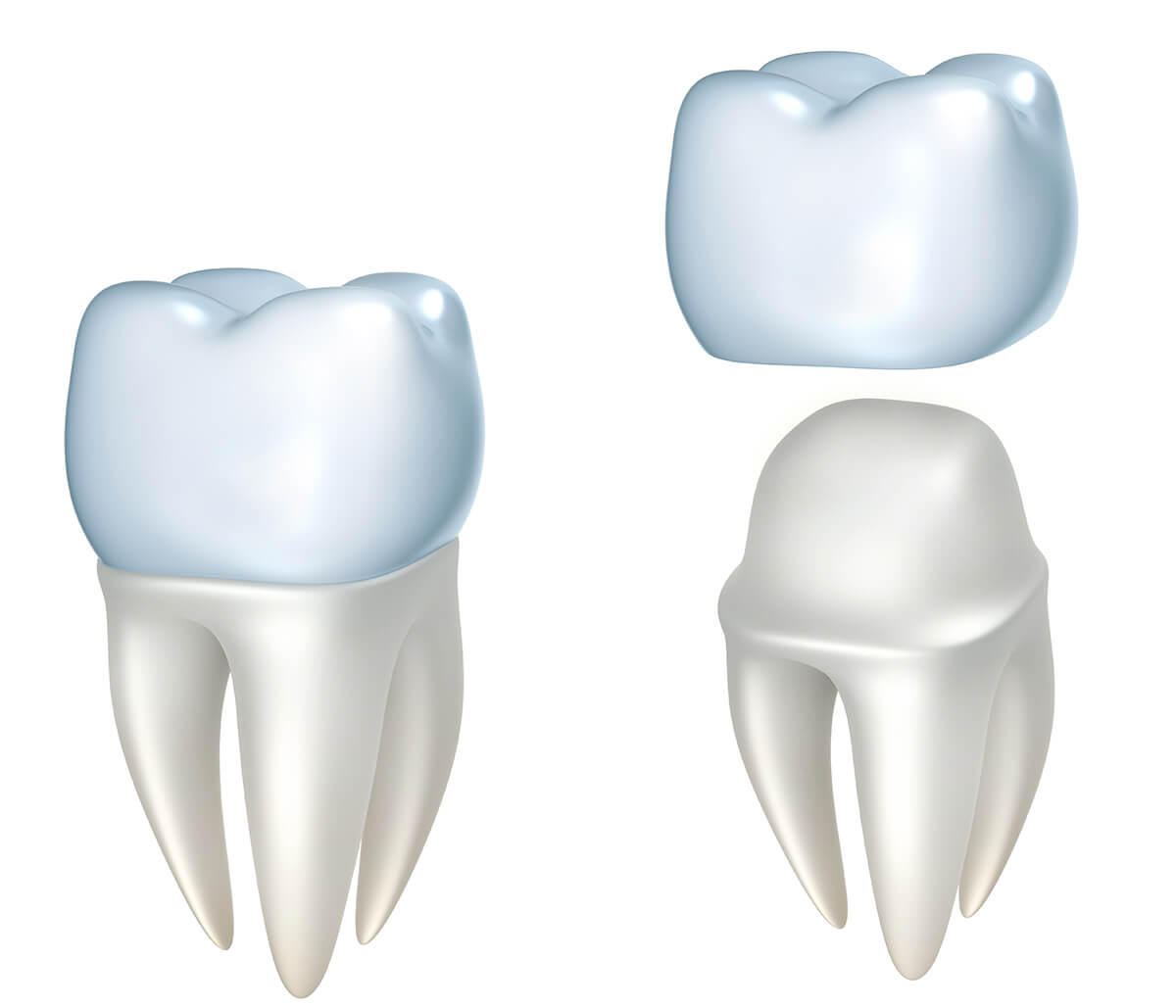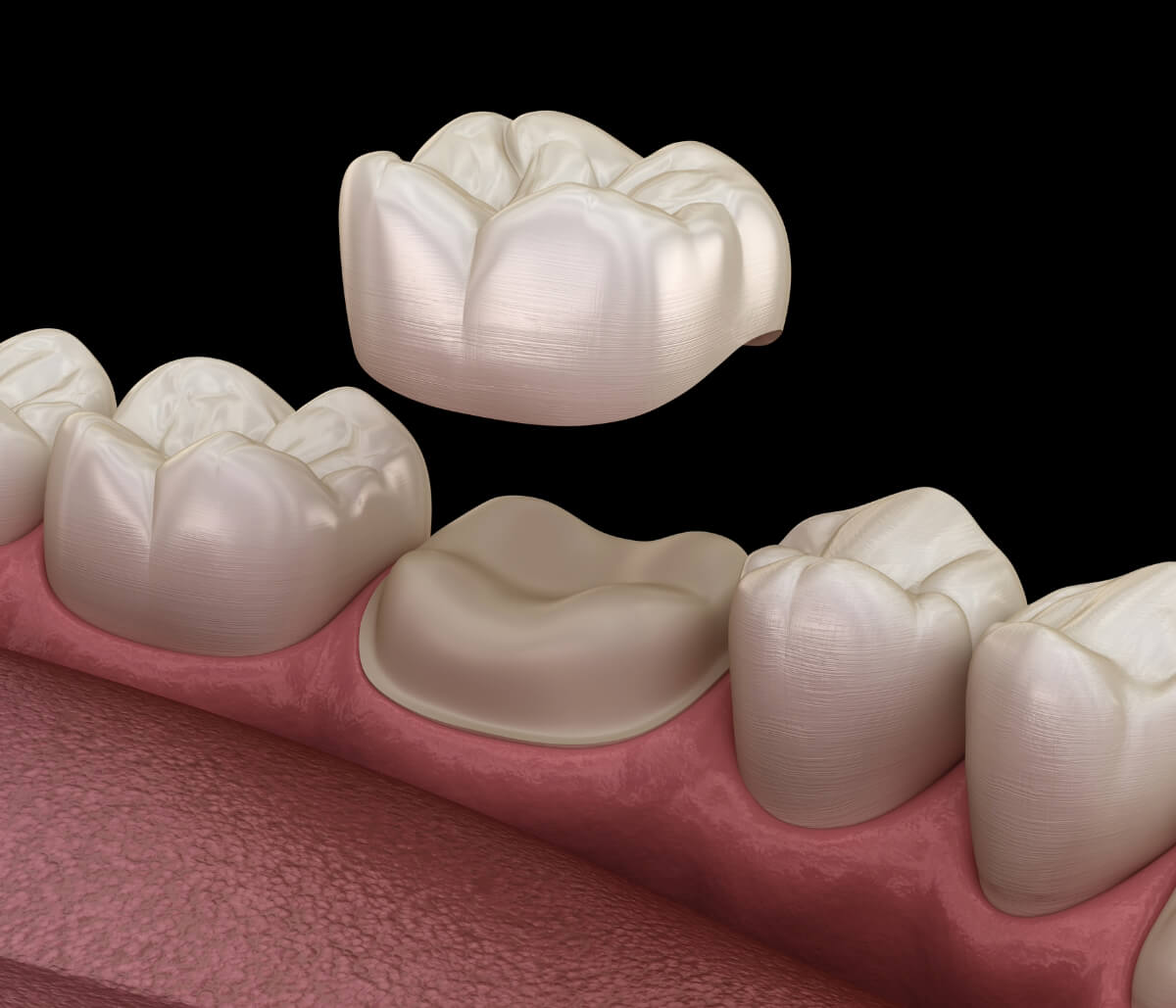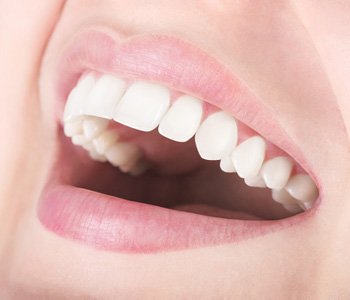


Teeth that are badly broken have large fillings or have been treated with root canals and need to have crowns placed on them to restore the tooth to proper function.
There are several types of crowns available for different areas of the mouth.
Back teeth crowns can be:
- full gold
- porcelain fused to metal
- e-Max ® porcelain crown (not for people who clench or grind their teeth)
- full Zirconia
Front teeth crowns can be:
- e-Max ® porcelain
- Empress ® porcelain
- Zirconia with porcelain
- porcelain fused to metal
The procedure for a crown is first to put the tooth to sleep with local anesthetic. Then the tooth is prepared (cut down) on all sides and the top to allow enough room for a dental lab to fabricate a crown. A mold is taken of the tooth and then a temporary crown is made to cover the prepped tooth while we wait for the dental lab to make the crown.
Once the crown is returned by the dental lab, an appointment is made to seat (place) the crown. At the seating appointment, the tooth is put to sleep, the temporary is removed, and the permanent crown is placed on the tooth to check for a proper fit. If everything is perfect, the crown is cemented with strong dental cement that adheres to the underlying tooth structure. With good oral hygiene and regular professional dental cleanings, crowns can last many years.
Unleashing Your Smile Real Patients, Real Results by Dr. Bruyere
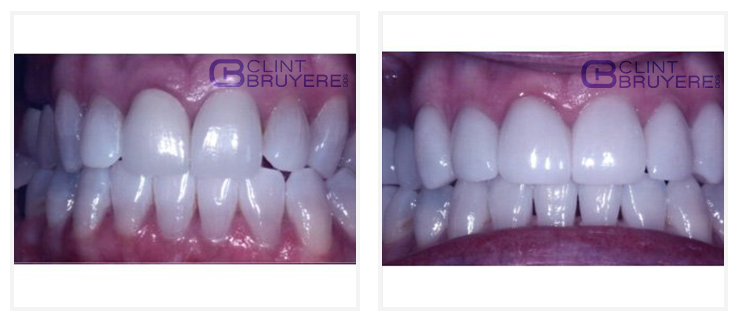
Dr. Bruyere’s patient had crowns for 15 years and disliked the way they looked. When she had Dr. Bruyere replace them she was so happy with the way they looked and felt!
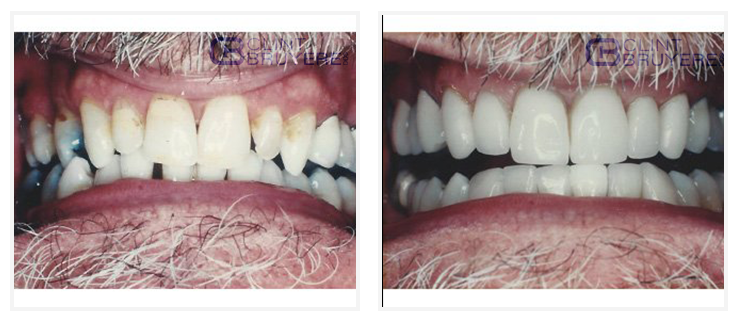
This patient was ready for a change in his appearance. He did not like the spaces between his teeth and he had composite fillings that were yellowed and failing. Dr. Bruyere placed porcelain crowns on all his teeth in what is known as a full-mouth rehab and the patient was so thankful with his new look!
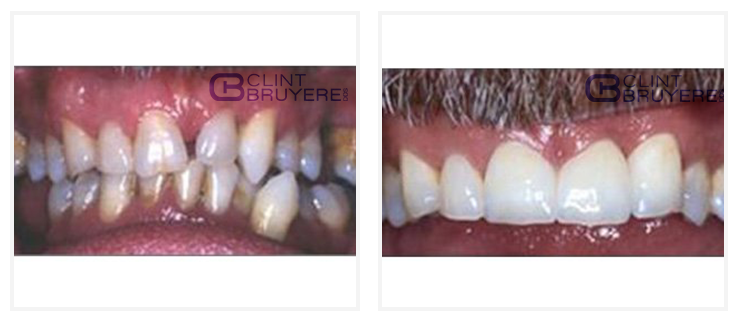
This patient was missing one of his front teeth and the space had closed in. Dr. Bruyere was able to fill in the space by placing porcelain crowns thus making it appear as though there is another tooth.
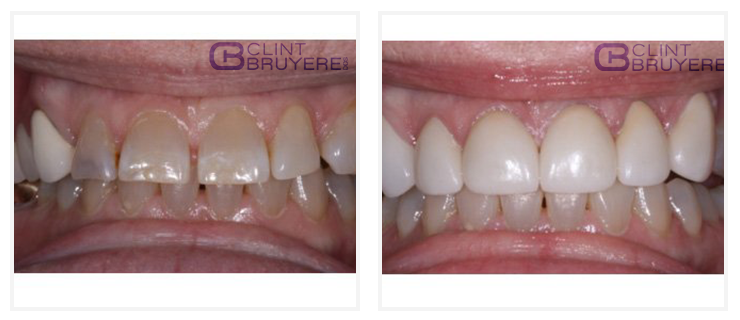
Dr. Bruyere made this patient so happy by changing her smile. She was unhappy with her discolored teeth, spaces between them, and mismatched crowns. Dr. Bruyere placed porcelain crowns to achieve a totally new look!
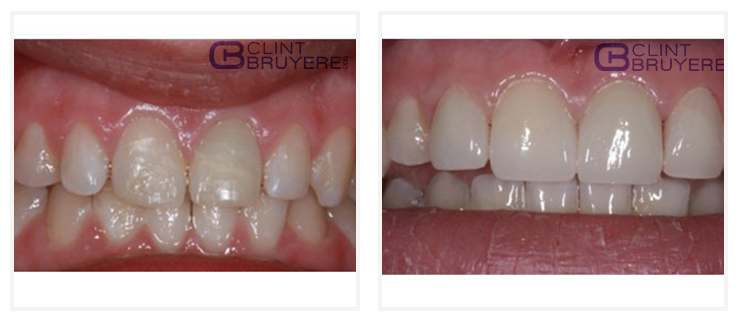
This patient had an accident that caused her to need root canals on her four top front teeth. She had large composite fillings to repair the teeth at that time and was very unhappy with them. Dr. Bruyere placed four porcelain crowns that made such a difference in her smile and her life!
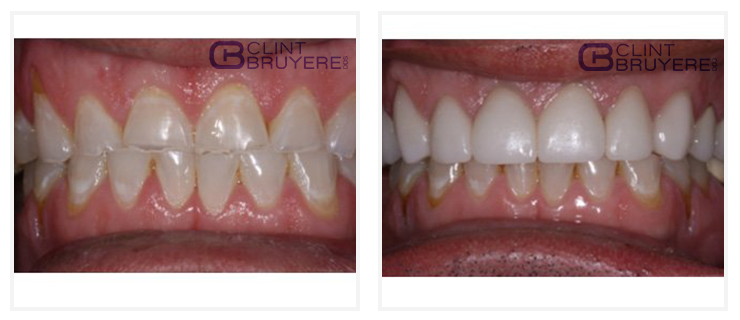
This patient had severe wear on his front teeth from grinding. Porcelain crowns were placed by Dr. Bruyere to lengthen his teeth and give them a proper size. Dr. Bruyere’s patient was so happy with the difference in his smile!
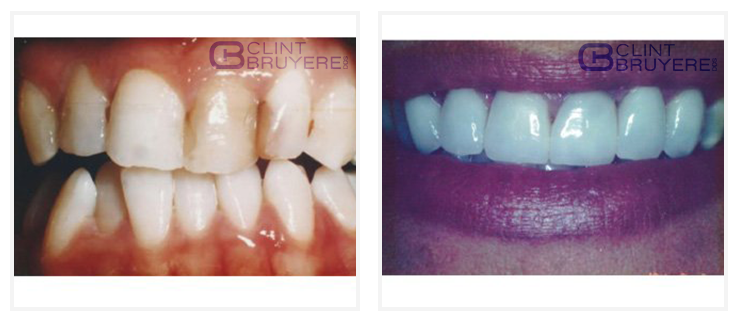
This patient had large, discolored composite fillings that were failing. She was amazed at the transformation in her smile after having porcelain crowns placed by Dr. Bruyere.
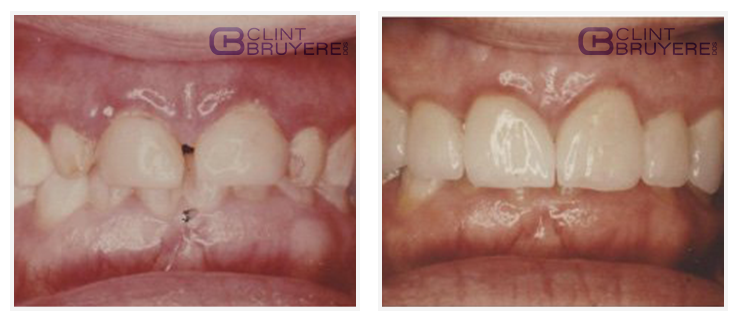
Dr. Bruyere’s patient was very unhappy with the space between her front teeth and the shape of her other teeth. He placed six porcelain crowns on her front teeth and she was extremely happy with the results!
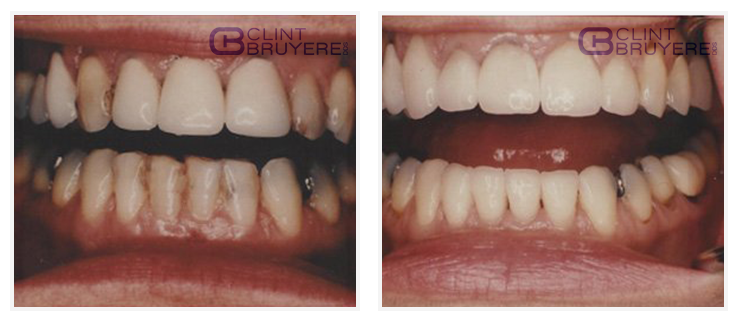
This patient was very unhappy with the shape and color of her crowns and had large, discolored composite fillings in front. After the placement of six porcelain crowns in front she could smile in photos again!
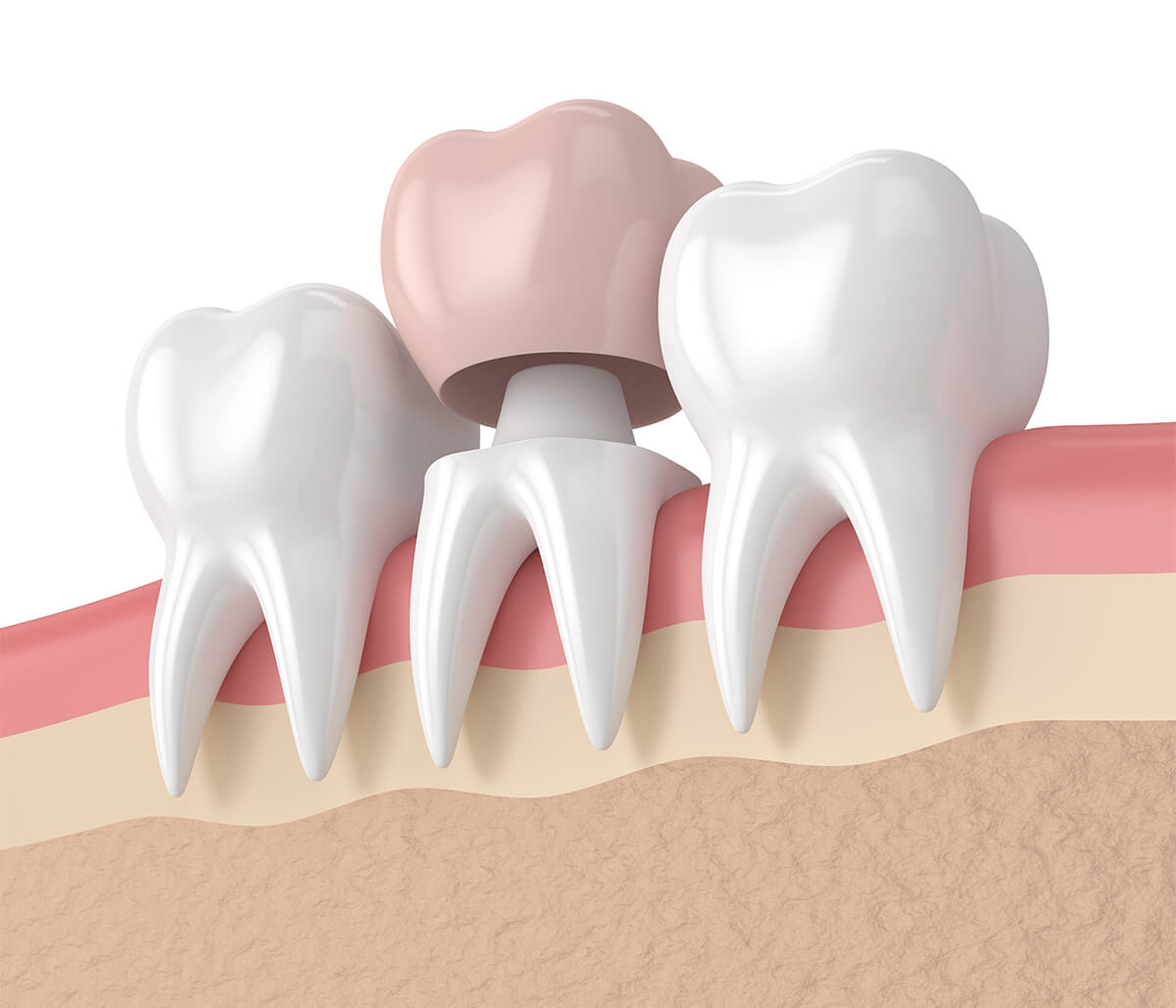
Bridges are used to replace missing teeth. The steps are the same as for a crown but more teeth must be prepared to support the bridge replacing the missing teeth.
Crowns and bridges must be cared for just like your natural teeth. Crowns and bridges can get cavities at the tooth margin and since it is covering your natural tooth, is subject for getting gum disease also.
Good oral hygiene, frequent regular cleanings, and checkups will help your crowns last for years.
If you think you need a crown or bridge, please call our office at (903) 708-6116 for an appointment.
The Man Behind the Mask:
Dr. Bruyere graduated from Texas A&M whilst finishing at the Baylor College of Dentistry. He possesses a fellowship with the Academy of General Dentistry and 30 years of experience in dentistry.Dr. Bruyere enjoys keeping up with the latest information on dental products, treatments and techniques whilst providing the best quality dentistry to his patients.